
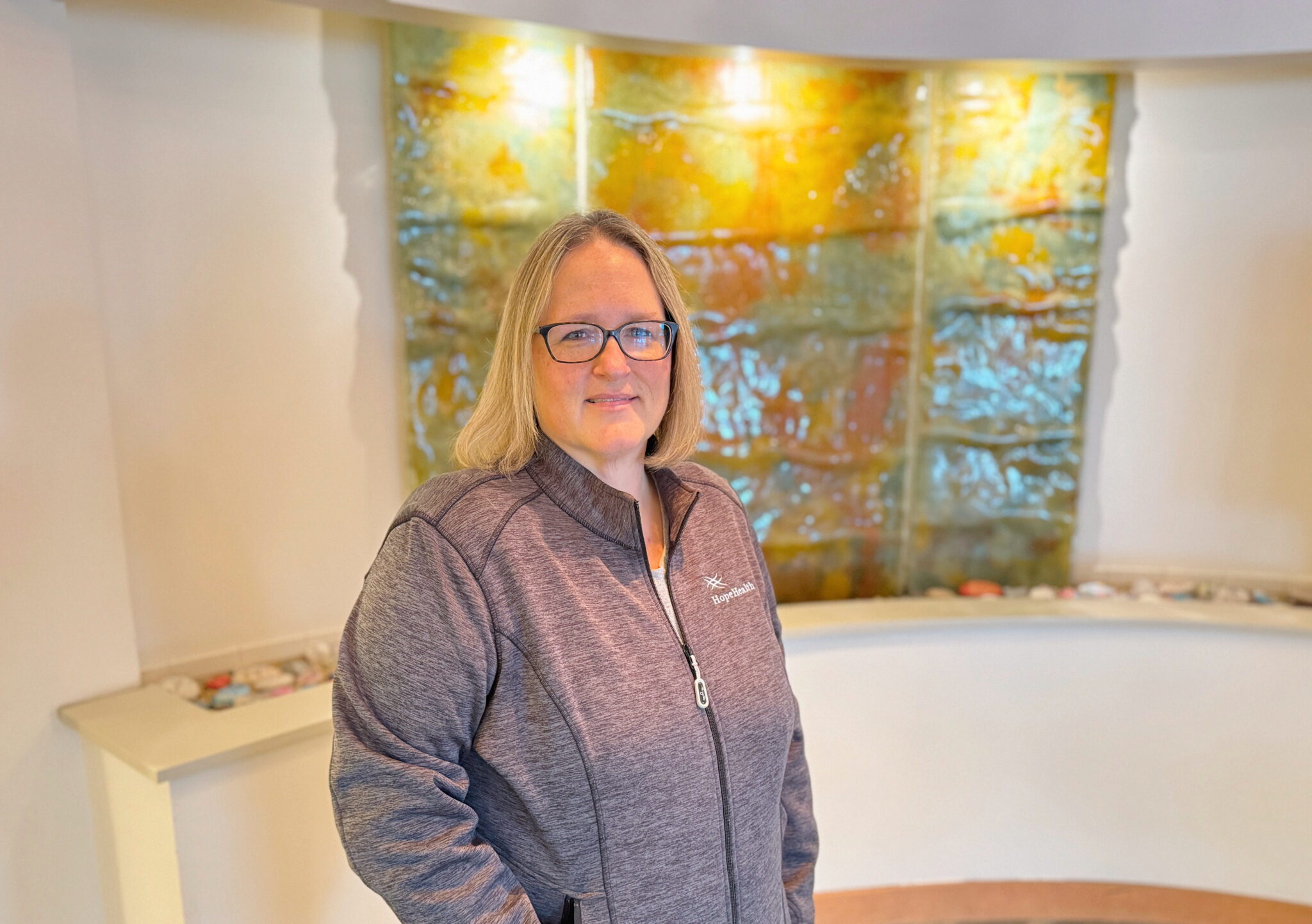
When Kathleen Kassay’s mother was diagnosed with cancer, she was told she might have a year to live. Instead, she lived nearly four.
In that borrowed time, she prepared. For nearly three decades, she had served as the minister of a thriving congregation — and she approached the end of her life with that same sense of intention. She crocheted blankets for each of her three granddaughters. She assembled recipe books filled with family favorites. She sorted photographs.
And she talked with her family, openly and plainly, about dying.
She didn’t pretend it was easy. But she also didn’t pretend it wasn’t happening.
“Don’t get me wrong: She didn’t want to be leaving us,” says Kathleen. “There were times when she was angry, or afraid. But she worked through the emotions. I think talking openly helped her make peace with what was happening. It was healing.”
Three months after her mother’s death, Kathleen made a career change. A longtime social worker in the field of substance use, she shifted into hospice care. Today, as a social worker with HopeHealth, much of her work centers on helping families do what her mother instinctively modeled: face what’s happening, together.
“I’d thought about joining hospice before. But going through it as a daughter — I saw how important it is. I understood what it’s like for families,” Kathleen says. “That solidified it for me.”
Naming what’s scary
For Kathleen, one of the great healing powers of hospice is that it makes the dying process less frightening. Part of that is simply in naming what’s happening — and identifying what can be eased, clarified or supported.
“Our society doesn’t like to talk about death and dying, which makes folks more afraid of it,” she points out. “Different people have different fears. Will I be in pain? What if my family doesn’t agree with my wishes? Will my partner be OK when I’m gone? But whatever you’re worried about, your hospice team is here to focus on your specific concerns.”
Some members of this team — doctors, nurses and hospice aides — bring physical comfort and disease education. Chaplains bring spiritual support. Social workers focus on the emotional, relational and practical realities that surround serious illness.
“The nurses and doctors are looking at you from more of a medical perspective,” Kathleen says. “As social workers and chaplains, we’re trying to look at everything else — how you are as a whole person, what makes you you.”
They are often the ones who create space for hard conversations — the first step in easing what can be eased, and supporting families through what cannot.
For example, when caregiving responsibilities collide with full-time jobs, social workers help families apply for caregiver leave. When financial stress intensifies, they bring in community resources. When family tensions surface, they help mediate conversations and keep the patient’s wishes at the center.
“These problems don’t stop just because someone is sick,” Kathleen says. “Social workers are trained to address those stresses and realities so families can focus on their time together.”
They guide families through practical but often uncomfortable decisions — from funeral planning to advance directives — so those conversations don’t happen in crisis. Finally, they also work through the less tangible burdens like fear, regret and unresolved conflict. By bringing those difficult emotions into the open, they often become lighter.
“The things that you don’t say that are scaring you — you give that more power,” Kathleen says. “When you can talk about it and work through it, you take some of that fear away. We’re here to make sure people feel heard, supported and clear about what they want.”
> Read: Every life is unique. So is every death.
The gift of time
One lesson Kathleen carries from her mother’s experience is the value of time — particularly when it comes to the conversations many families delay.
It’s one reason she encourages patients and families to consider hospice sooner than they might think.
“Hospice is more useful the longer you’re on it,” she says. “The earlier you start, the more time you have to develop relationships and do some of this emotional work.”
When that happens, families have space to address not just symptoms, but deeper questions: What am I afraid of? What needs to be said? What would peace look like for us?
Of course, these conversations don’t erase grief. They can never fully eliminate anger or fear. But as Kathleen knows so well from her mother, they can soften them.
“My mother showed us that dying doesn’t have to be something we avoid talking about,” Kathleen says. “It can be a process that’s loving and nurturing. That’s what I want for every patient and family I meet.”