
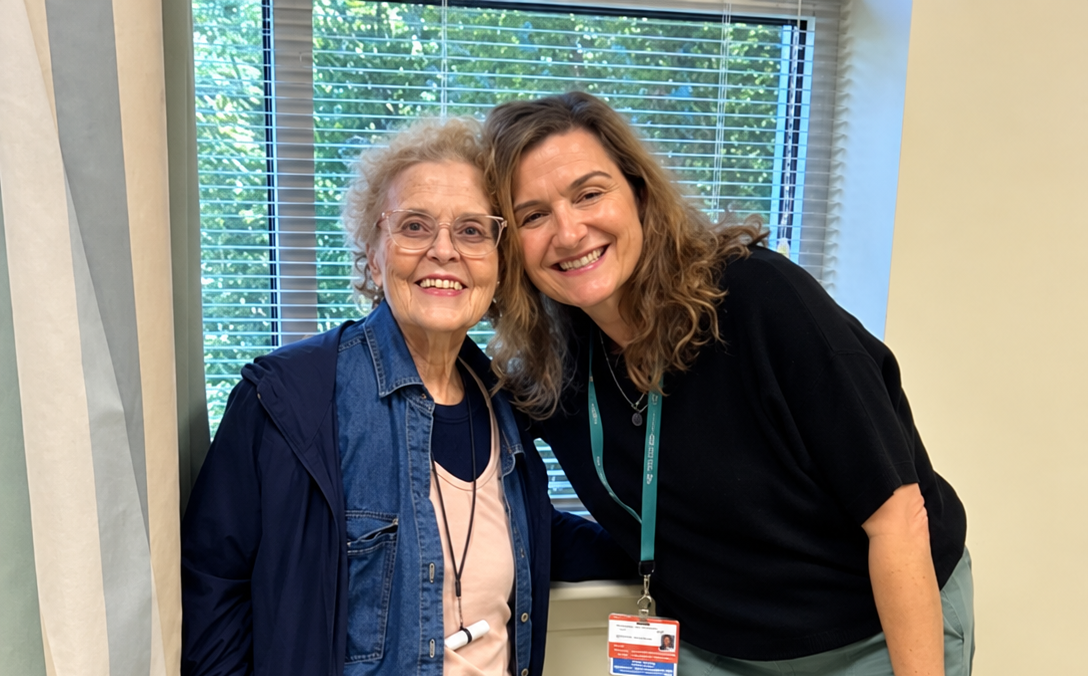
As a palliative care nurse practitioner, Janie McPhillips, NP, ACHPN, is known for navigating some of the most complex moments in serious illness. But in conversations with patients and families, the question she often returns to is simple: What matters most to you?
“Once you know what matters to someone, you can start figuring out what good care looks like for them,” she says.
Janie helped establish HopeHealth’s palliative care program at Brown University Health Cancer Institute at Newport Hospital; she also cares for patients at the Brown University Health Cancer Institute in East Greenwich. She shares her path here, and what makes it so meaningful.
> Ask about palliative care for you or a loved one.
HopeHealth: Earlier in your career, you spent 12 years in critical care. What drew you from that work to palliative care?
Janie: I was an ICU nurse for about 12 years before becoming a nurse practitioner. This was about 20 years ago, and we weren’t having goals-of-care conversations in the way we do now. It was usually just assumed that patients would get CPR, or a feeding tube, or the next medical intervention.
Over the years, it started to dawn on me: We were doing all these interventions, but were we asking people whether they actually wanted them?
There was one patient in particular. He coded, we did CPR and we got him back. We couldn’t get him off the ventilator, so he had a tracheostomy and feeding tube placed. At the time, we felt like we’d succeeded — we were all so focused on saving his life. As he was leaving for the nursing home, he mouthed the words to me, “What did you do to me?” It stopped me in my tracks. Medically, we had gone ahead with every intervention. But it felt like nobody had stopped to ask him if that’s what he wanted.
When I became a nurse practitioner, I went into surgical oncology and again saw situations where I thought, How much is too much? I was also doing a lot of symptom management, and becoming more and more passionate about it. That naturally led me to palliative care and HopeHealth. I love the mix of complex symptom management with goals of care.
People often confuse palliative care with hospice, even though palliative care can begin much earlier in a serious illness. How do you explain the difference to patients?
When Dana Guyer, MD, FAAHPM, created our palliative care program at Brown University Health Cancer Institute, she intentionally named it “supportive care.” There was a reason for that. When some patients hear “palliative care,” they immediately think, “Are they going to start talking to me about hospice?” That’s not what we’re doing. Calling it supportive care helps patients understand that we’re there to help manage symptoms, navigate the challenges of serious illness, and support them through their care — not because they’re dying, but because they’re living with serious illness.
As your palliative care provider, I’m here to be your biggest cheerleader throughout your treatment and figure out how we get you through it feeling the best you can. That starts with connecting with you and your loved ones and learning about you. From there, we can figure out a plan for your symptoms.
That can mean supporting the emotional side of what patients and their families are going through. It’s also very much about managing physical symptoms. With some treatments, we know what the trajectory can look like, so we can plan proactively for symptoms. People feel better just knowing a little bit of a forecast.
Palliative care can start at diagnosis for some patients or come in later when someone needs more support. Ideally, though, we’re involved months or even years before anyone is talking about hospice. If we’re first consulted when someone only has days or weeks, we’ve missed all that time when palliative care could have been helping.
Can you share a patient experience that captures what this kind of care can make possible?
One patient comes to mind right away. She was living with advanced cancer, and her daughter was about to be married. Every week, she would come into the center sharing stories about the wedding preparations. And every week, she reminded us: She was determined not to miss the wedding. When we talked about what mattered most to her, that was her goal.
It took a real team effort — palliative care, medical oncology, nursing and social work all working together around what mattered most to her, continually adjusting her medications and adding IV hydration. She made it to the wedding. When I think about her being there with her daughter for such an important moment, I feel such a surge of pride for our team.
> Read: What palliative care means for people living with cancer
You mentioned how important it is for patients to think about their goals of care, including planning ahead for difficult decisions. How do you begin those conversations?
One reason I love being a palliative care nurse practitioner is that we have time to start with a genuine connection. We get to know each patient as a person. Cancer is not their life. It’s what they have; it’s not who they are.
It could be something as simple as saying, “You like dogs too? Show me a picture of yours!” Once we have that connection, people start to naturally open up about their values. We talk about what matters to them and make sure the care we’re planning supports that — which interventions feel okay, and how much is too much. Someone might be determined not to leave these decisions to their kids, and having the conversation now can give them peace of mind.
Of course, sometimes people say, “I don’t want to talk about this right now.” That’s fine too. I’m not here to force the issue. If we’re doing this right, we’re having these conversations long before we “need” to. The point is to give people the dignity and respect of having time to think about what types of care they do and don’t want.
People sometimes assume working in serious illness care must be depressing. Is it?
This question comes up a lot. When people learn that I specialize in palliative and hospice medicine, so many of them immediately say, “My gosh, isn’t that depressing?”
Is it sad sometimes? Of course. Of course it can be sad.
But is it depressing? No. What’s depressing is when nobody asks a patient what they would or wouldn’t want, and then their family has to make really difficult decisions in a crisis — all because we didn’t talk about it.
People can be scared that these conversations themselves will be upsetting. But so often, what I see afterward is a sense of relief, peace and calm. Patients can say, “I did this. I made these decisions.” And it feels okay because those decisions line up with their values.
So no, this is not depressing work. It’s incredibly meaningful and fulfilling.