
After the death of his wife, Carol, HopeHealth grief counselor Guy Murgo remembers struggling to answer the unavoidable question: How are you?
At first, he tried honesty: “Terrible.”
It made people uncomfortable, although it barely skimmed the surface. So he started saying, simply, “Okay.”
He was not okay.
“The heartache was unbelievable,” Guy says.
It was writing that helped him through. One day, he sat down at his laptop and began writing poetry — something he hadn’t done since college. He didn’t overthink it. When he started a piece, he had no idea how it would end. But poem after poem, it began to help.
“It allowed me to release so much sorrow in ways nothing else could,” he says.
In one poem, he wrote about waking each day to rediscover Carol was gone: “The breaking of my heart begins before light creeps under the shades.” In another, he described her bravery going into that final, fateful surgery: “You smiled ‘Hi, honey,’ before we parted, brave beyond reason.” He wrote down all the things he could not — or did not want — to say out loud. Over time, it became a crucial part of how he processed his grief.
Years later, Guy turned that personal experience into a popular creative writing workshop for HopeHealth, offered at the Weekend of Hope & Healing, a fall grief support retreat for adults, and Camp BraveHeart, a summer camp for grieving youth.
This spring, HopeHealth is hosting an additional Creative Writing workshop on May 21, free and open to the general public. It concludes HopeHealth’s newest community series, The Art of Hope for Grief, which explores different forms of creativity as ways to cope with grief.
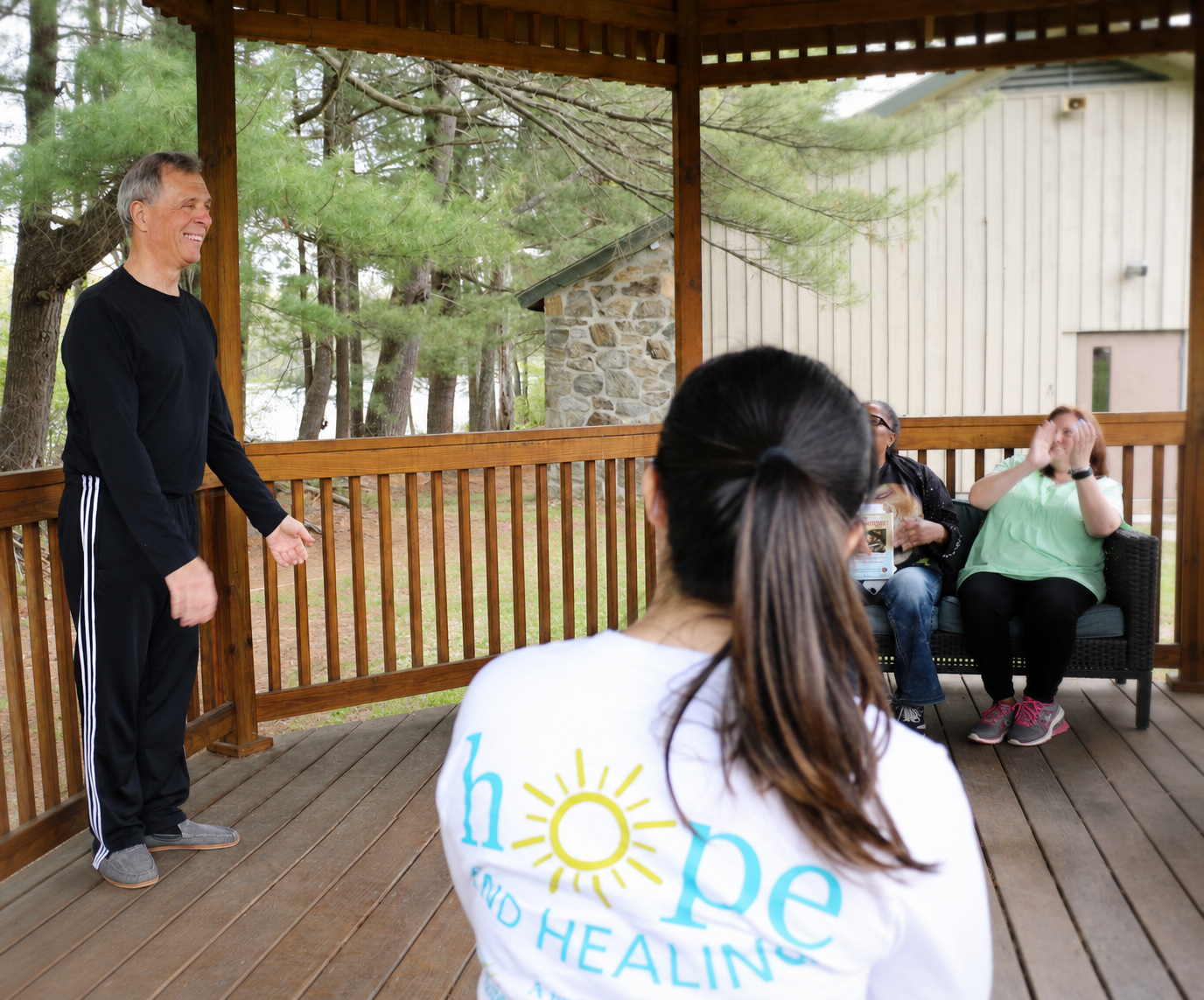
“This is not, ‘I have to do my English assignment,'” says grief counselor Wilson Hood, MDiv, who will co-facilitate the May 21 workshop along with grief support manager Marsha Ireland. “This is really simple, really personal, really from the heart. These workshops are for everybody, whether or not you think of yourself as a creative person.”
Are you grieving a loss? Join us May 21 for the Creative Writing workshop
How creativity heals: Attention, expression and connection
Not everyone wants to sit and talk about loss, whether in a support group or with a loved one. Even those who do can benefit from another outlet. Still, many of us might not think to pick up a pen, paintbrush or any other creative tool without some encouragement. When we do, it can be a turning point.
“So much of what can be healing is telling our story,” Wilson says. “Art can be a really powerful way to do that.”
“The grief needs to come out,” Guy adds. “All those feelings that nobody wants to talk about need to come out. Creativity can begin to open those doors — it can release emotions that may be so deep that you’re often unaware of them.”
In his workshops, he begins by explaining there is no “right” way to approach creative writing — it can be a story, a letter to a loved one, a poem, a journal entry or just jotting down thoughts. Despite this assurance, he sees skepticism on some faces. Many people are convinced they won’t know how to begin, or won’t have much to say beyond a few words.
Workshop after workshop, he watches those same participants become absorbed in the process, and wind up scribbling intensely through the moment he calls time.
“They have no idea what they’re going to write until the pen hits the paper. Then it goes right for the heart,” he says.
This experience is crucial for helping “the grief come out,” as Guy puts it. But that’s not all. Over time, a creative practice can also begin to reshape how we think about our loss, ourselves, and what comes next.
“So often, our experience in grief is about processing the absence of something — of our person, our old sense of structure, our old sense of self,” Wilson points out. “But when you’re being creative, you’re bringing something new into the world. Where there was an absence, there’s now a presence. When we’re feeling powerless, it can grant us a sense of control again. That’s healing.”
> Related: 6 Steps to Create a Healing Music Playlist for Grief
A creative community
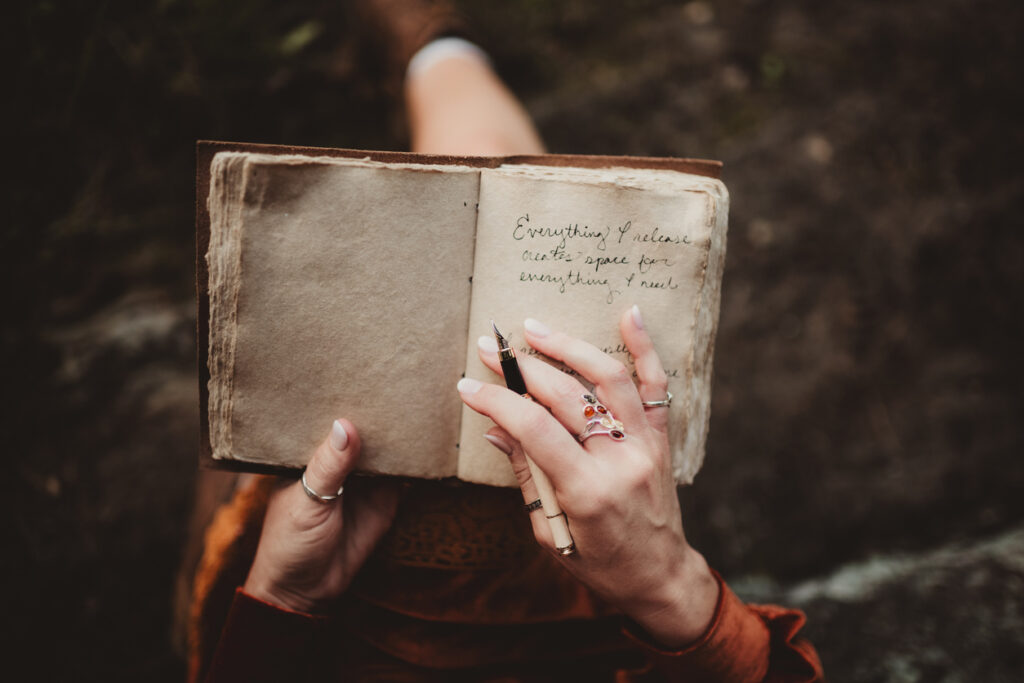
Support groups create connection through conversation. HopeHealth’s creative workshops often reach that same connection in a different way — through what people make, share and recognize in each other. Toward the end of each session, participants are invited — but never required — to share what they’ve written. The sense of community in the room is palpable.
Wilson remembers watching it unfold at last fall’s Weekend of Hope and Healing.
“You could tell some people were nervous. This was maybe something they had never talked about before, or had never talked about in that way,” he says. “As each person shared, without fail, there was at least one other person in the room who was nodding. Like, ‘Me too.’”
“That’s really the power of creativity,” he adds. “That ability to really connect with another human being.”
It can also help others better understand what someone is carrying.
“It’s a powerful way not only for us to learn something new about our grief,” Wilson says, “but for the people who love us to understand it, too — especially when it’s hard to put into words.”