
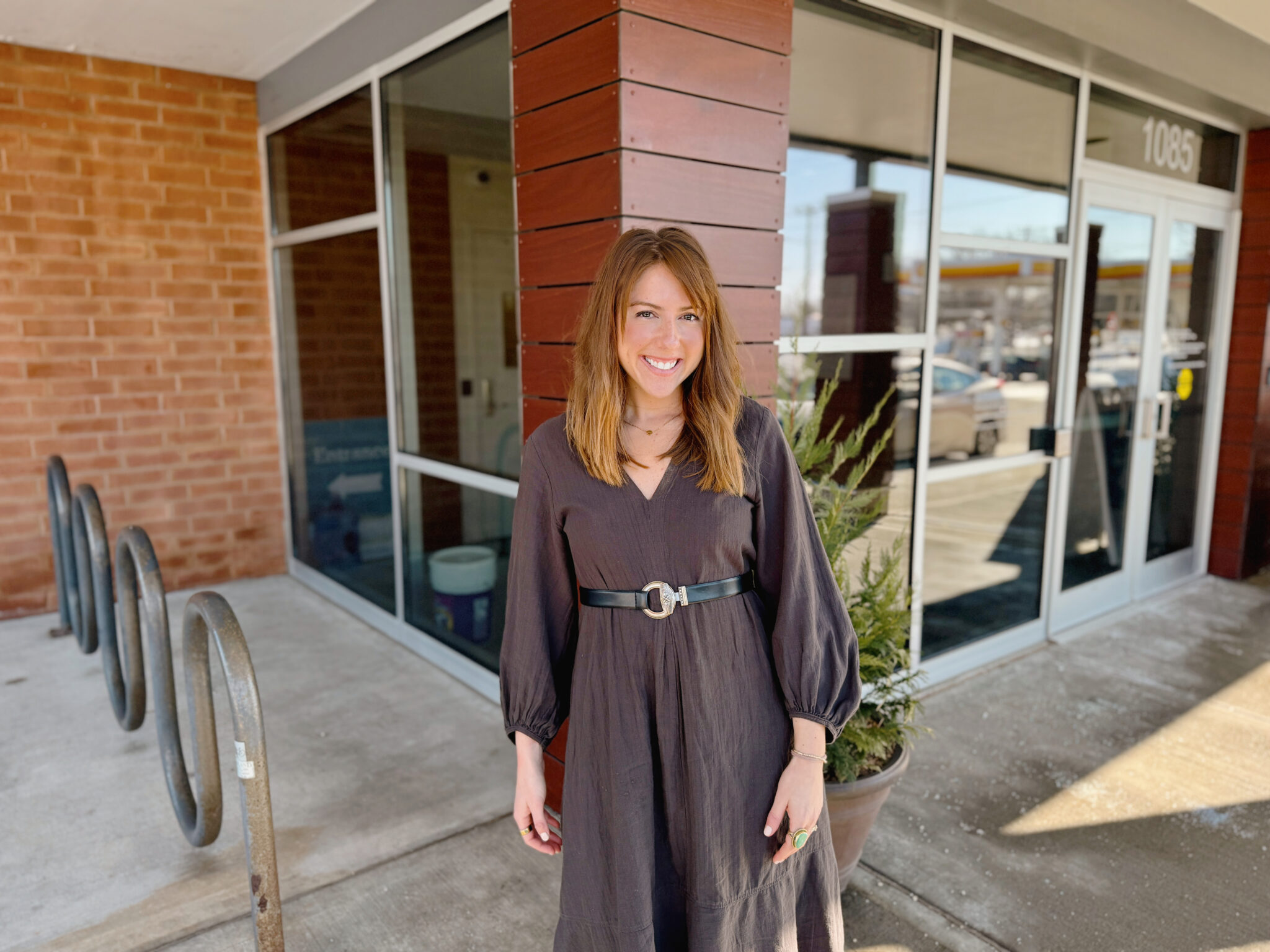
When Tess White was 17 years old, she lost her mom. It taught her about the fragility of life, and the importance of finding her own path.
When she was 28, she lost her dad. It taught her that no one should have to grieve alone.
Today, she channels those profound losses — and lessons — into her work as a grief counselor at HopeHealth.
“My goal is to help people feel less alone. That’s it,” she says.
We’re grateful to Tess for sharing her story.
> Are you coping with grief and loss? HopeHealth offers free, virtual grief support groups.
HopeHealth: Your first experience with grief was as a teen. Can you talk about that?
Tess: I had what I would call the best mom on planet Earth — truly my best friend, my soul mate. And then when I was 14, she changed. I genuinely thought she had a brain tumor because her behaviors shifted so much.
I learned later that she was battling addiction. At age 14, I didn’t even know what that meant. Our household turned into a tension-filled, stressful environment. It was confusing. I was already grieving the person she had been — the essence of her — while she was still alive. The loss had already begun.
She died traumatically when I was 17.
You’ve described that moment as your “world splitting in two.”
Yes. One half of me kept going to school, trying to look normal — attending prom, showing up to class, and doing my best to function. The other half felt like I was living on a different planet.
I didn’t know any other girl my age who had lost her mother. I didn’t know grief counseling existed. Yes, I had incredible friends and family members, but I did not have any other teenagers my age to relate to.
Also, my mom’s addiction wasn’t something people knew about. It was secret. Her death was shocking and it disturbed people — they didn’t know what to say to me. So what was hard wasn’t only losing her. It was the feeling that no one understood, that I didn’t have any space where my grief made sense. It was a type of loneliness I’ll never be able to put into words. I don’t want anyone to feel like that.
When you look back on that 17-year-old version of yourself now, what do you wish she’d had?
I wish I had a grief counselor and a therapist to help me process not only the tragic loss of my mom, but also educating me about addiction and mental health. A place where I could speak honestly and not feel like I was too much, or like people needed me to be “better” quickly. Having one person in my life who wasn’t a family member who could sit with me and just listen.
I think about her all the time — the 17-year-old version of me. Grieving, confused, not knowing who she was or who she could be without her mother, searching endlessly for someone who understood. The work I do now is for her.
Grief work is clearly your calling — but it wasn’t your original plan. How did this work find you?
I got my degree in public relations, and landed a publicist role at a renowned publishing company in New York City. It was a job that I knew so many people coveted, as I was working with so many world-renowned artists, athletes, and celebrities. It was the kind of job you’re supposed to want.
I have never felt so unfulfilled, and burnt out.
One day at work, on set at the Today Show, I had this “aha” moment. It was five in the morning, and I remember thinking: If I’m at the top of what I thought I wanted, and I feel like this, then I can’t ignore it. I have to change everything. I really believe it was my mom. Losing her so young had put life into perspective for me.
So I left. Walking away from that opportunity is still the scariest thing I’ve ever done. But I knew I needed to rebuild from the ground up, and get back to what felt like my truest self.
I moved back home to Rhode Island and worked at a university while earning two master’s degrees in mental health. I got a second job as a counselor at a group private practice. Sitting in that chair and witnessing people be their vulnerable and true self with me, I felt like my most authentic self. I finally found my place in the world.
Around that time, you lost your dad — an experience that connected you to HopeHealth. Will you share what happened?
I was 28. It was March 2020, the beginning of the pandemic. Everything was so frightening. Everyone was scared. Then my dad got COVID. He was on the ventilator for seven weeks and fought so hard with the help of so many incredible doctors and nurses, who truly cared for him in the most tender and genuine ways, knowing his family could not be there by his side.
HopeHealth was incredibly kind. Thanks to them, my dad was able to die peacefully in the HopeHealth Hulitar Hospice Center. Thanks to them, my stepmom and I got to be with him in person during his final days, as well as my sister who got to Zoom in from her home in California. We were so grateful for that, knowing so many families were unable to say goodbye due to the pandemic protocols. Even though it was one of the worst days of my life, I was so grateful that he was able to die in a setting that was calm and well-managed, with the medication he needed, while Bruce Springsteen, my dad’s favorite musician, was playing softly in the background. We could never have shepherded him to the other side without that.
After he died, I joined a HopeHealth virtual grief support group for people who lost their loved ones to COVID. I was immediately drawn to the facilitator — I admired the way she held the space. I asked her for an informational interview to learn about her work as a grief counselor. She talked about how fulfilling this work is, how every day she walks with people on their grief journeys. I was so inspired.
Last year, when I saw the job opening for a grief counselor at HopeHealth, I remembered that conversation — and I thought about my dad.
And now, here you are! You joined HopeHealth last fall. What is it like to work here?
Here I am! I walk these halls as a professional and an employee, but I also walk them as someone who has sat on the other side. It feels profoundly full circle.
Working in hospice and grief support is powerful. It’s such an honor to be let into the worlds of my clients and show them they don’t have to carry their grief alone. I’m blown away by the resilience that I witness. I learn so much from them. I will always carry their stories in me.
This work has already changed the way I move through the world. I feel like I soak up every ounce of life more intentionally.
I come home and I hug my daughter and my husband longer and tighter. I linger in that moment of looking at the sunset. I am so much more present in the everyday moments. After a hard day, I love my people harder. That’s one of the gifts of this work. You learn quickly to go all in on love, knowing that the risk of love is grief, and deciding to go all in anyways.