
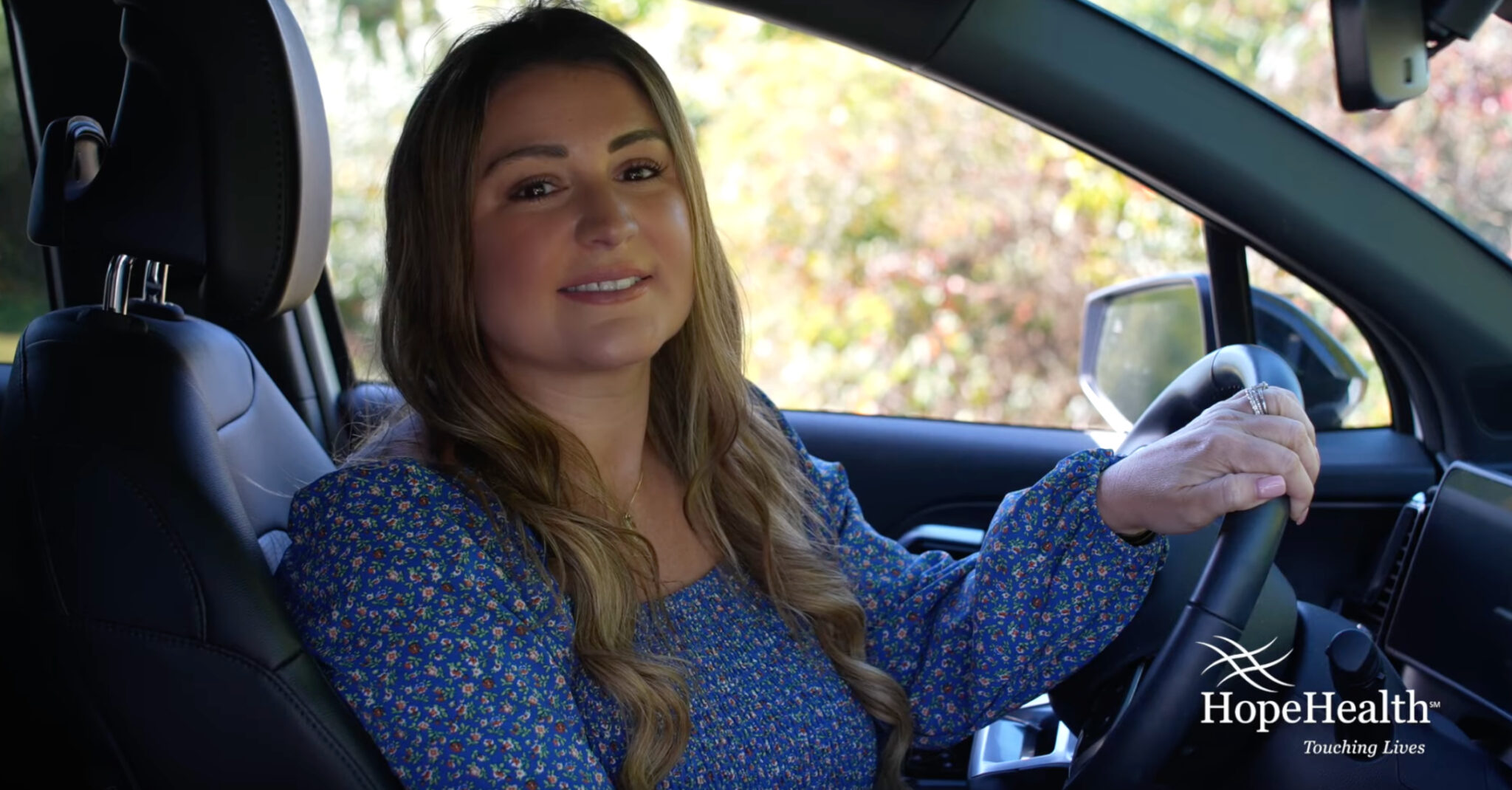
Back when Carly DiBiasio, NP, ACHPN, worked in a general hospital, she was drawn to the quiet, meaningful conversations she saw palliative care specialists having with patients and families. That experience, and those providers — who, as it turned out, were from HopeHealth — changed her entire career path.
Today, Carly is an integral part of HopeHealth’s Advanced Illness Care team, bringing palliative care services into the homes of patients and families.
We’re so grateful she found her calling with us, and proud to share this interview.
> Ask about palliative care for you or a loved one.
HopeHealth: What brought you to palliative care?
Carly: I started out as a bedside nurse in the intensive care unit (ICU) at Miriam Hospital in Providence. Whenever the HopeHealth palliative care team came in to meet with patients and families, I always made a point to sit in. I fell in love with those conversations — how the team helped patients and families understand what was happening with their illness, and make decisions that truly reflected their values.
Eventually I realized, this is what I want to do. I went back to nurse practitioner school specifically to work in palliative care — in the exact kind of role I have now with HopeHealth. It’s the perfect fit: I get to use my critical care background while focusing on what matters most to patients and families.
Funny enough, when I worked in the ICU, I didn’t even realize the palliative care providers were from HopeHealth! Once I joined this organization, I realized it was the same team I’d admired all along.
What’s something you wish more people knew about palliative care?
I wish more people understood how much palliative care can help with symptoms like pain or shortness of breath. It really can make a huge difference in how someone feels day to day.
But it’s not just about medication — it’s about quality of life. We also help people cope with anxiety or depression that can come with serious illness, and we connect them with counseling and social work if that’s helpful.
And you don’t have to be at the end of life to receive palliative care. I tell my patients all the time: We’re here to help you live as well as possible, for as long as possible.
> Read: 7 common myths about palliative care
You’re part of HopeHealth’s home-based Advanced Illness Care team. What does that look like?
We provide palliative care to patients wherever they live, whether that’s at home, in a retirement community or in a skilled nursing facility. We do everything you expect from palliative care: We help manage complicated symptoms, we connect families with resources, and we have ongoing conversations about goals of care. But instead of patients coming to us, we go to them.
During a typical day, I drive to visit patients and families. In between, I’m talking to caregivers by phone or text to answer any questions that come up. For anyone who is living with a serious illness, having a medical team that is available and responsive matters so much.
> Read: Hospital, clinic, home: Understanding the settings of palliative care
Is there a patient or family who’s especially stayed with you?
I follow the same patients throughout their care, so I really get attached to them and their families. I think of one family often — a daughter caring for both of her elderly parents at home while working full time. Her dad was my patient, but the daughter also needed a lot of support as his caregiver.
She was devoted to keeping her parents together and honoring her dad’s wish to never go to a nursing home. At the same time, it was becoming too much. She was sacrificing her own health and life. I remember sitting with her, talking through what to do next, and helping her make some difficult decisions. That’s one of the things I love about palliative care: We can care for the whole family.
Both of her parents have since passed, but she and I still check in now and then. I keep the prayer card from her mom’s memorial on my car visor. She once told me, “You don’t know how much you changed my life.” At the time, I didn’t feel like I’d done much beyond listening — but sometimes, that’s exactly what people need most. I’ll never forget that.
HopeHealth’s mission centers on dignity. What does that mean to you?
To me, dignity means listening and giving people choices.
In health care, there are so many things patients and families can’t control — but they can always have a say in what happens next. There is dignity in that, and in knowing that your care team values your voice.
We can’t always fix the physical part of what patients are going through, but we can meet them where they are, acknowledge what they’re feeling, and say, “I get it. Tell me more. Tell me how I can help.”
> Read: “This work has changed me”: Q&A with HopeHealth’s chief medical officer
Has working in serious illness care changed you personally?
Definitely. It’s made me a better listener — not just at work, but in general. It’s taught me that being present with someone, really listening, can be one of the most powerful things you do.